EN
EN


YIQIN presents a comprehensive introduction to nitriding for titanium-palladium alloy components, with a focus on titanium-palladium nitriding processes optimized for Ti-0.2Pd and Ti-0.3Mo-0.8Ni alloys. This article details the features, applications, innovations, and technical advantages of titanium-palladium nitriding for demanding industrial uses. The goal is to explain how titanium-palladium nitriding enhances performance, why titanium alloy surface hardening is essential for modern components, and how Ti-0.2Pd nitriding and Ti-0.3Mo-0.8Ni treatment developed by YIQIN provide reliable, high-performance solutions.
Titanium-palladium nitriding is a specialized surface engineering process that introduces nitrogen into the surface layers of titanium-palladium alloys to produce a hardened, wear-resistant, and chemically stable surface. For titanium-palladium nitriding, YIQIN leverages precise atmosphere control, temperature management, and time-profiles to form a diffusion-hardened zone without compromising core ductility. Titanium alloy surface hardening through nitriding mitigates common issues such as abrasive wear, galling, and fatigue-induced cracking, while preserving the bulk mechanical properties and corrosion resistance inherent to titanium-based alloys. By focusing on titanium-palladium nitriding, YIQIN delivers predictable surface characteristics across Ti-0.2Pd nitriding and Ti-0.3Mo-0.8Ni treatment programs.
Features of YIQIN’s titanium-palladium nitriding include controlled nitrogen diffusion, uniform compound layer formation, and minimal dimensional distortion. YIQIN’s approach to titanium alloy surface hardening ensures a uniform nitrogen-enriched layer whose thickness and composition are tailored to application requirements. For Ti-0.2Pd nitriding, YIQIN optimizes process variables to promote the formation of hard nitrides and solid-solution strengthening, producing a fine-scaled microstructure that increases surface hardness while maintaining fracture toughness. For Ti-0.3Mo-0.8Ni treatment, YIQIN adapts nitriding cycles to the alloy’s unique phase stability and alloying effects, ensuring effective nitrogen uptake and consistent surface performance. The titanium-palladium nitriding service is compatible with precision components, offering low distortion and high repeatability.
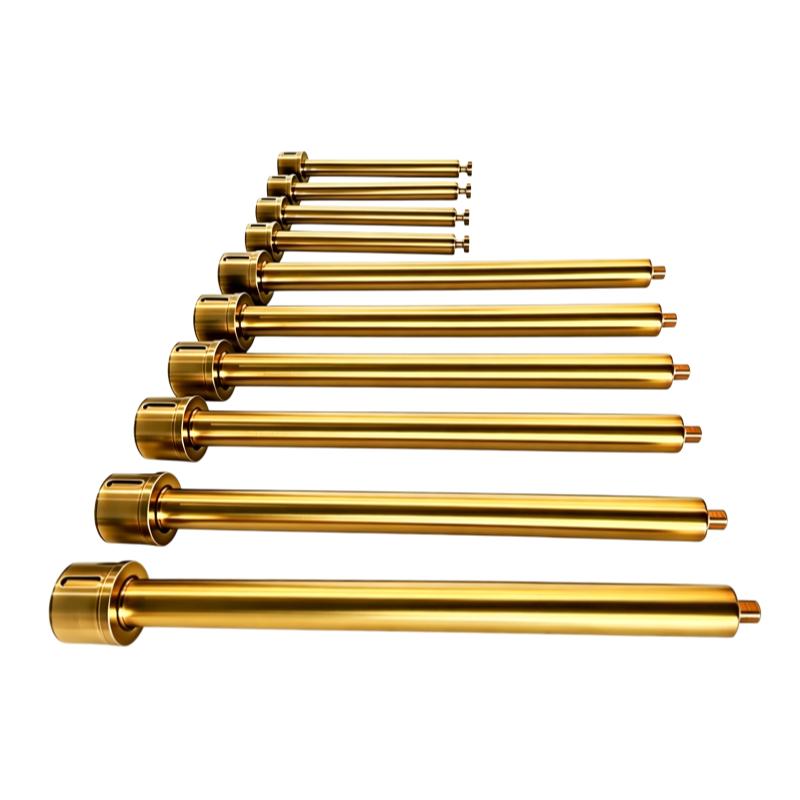
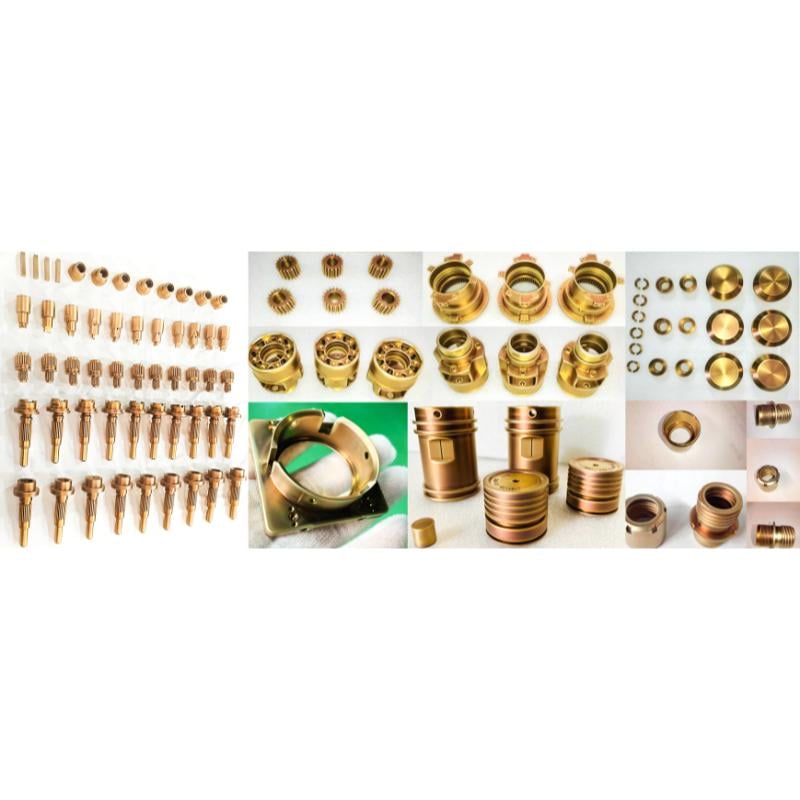
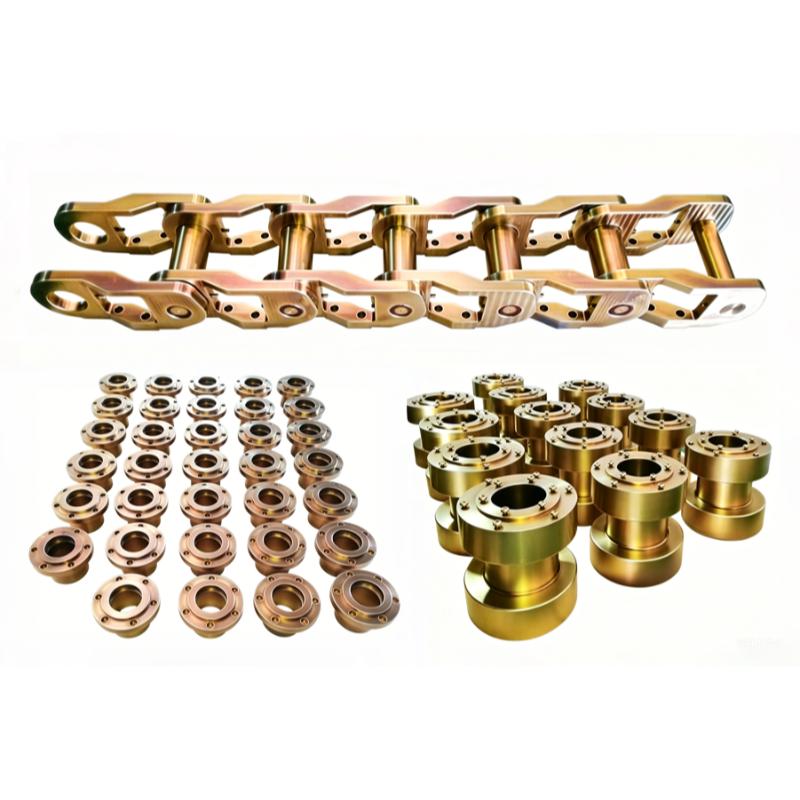
Applications for titanium-palladium nitriding span aerospace, medical devices, chemical processing, and precision manufacturing. Titanium alloy surface hardening is essential where components require a combination of low weight, high strength, and enhanced surface durability. In aerospace, titanium-palladium nitriding extends the lifetime of fasteners, actuators, and hydraulic components by reducing fretting and wear under cyclic loading. In medical devices, Ti-0.2Pd nitriding improves wear resistance for orthopedic and dental components while maintaining biocompatibility due to controlled surface chemistry. For chemical processing, Ti-0.3Mo-0.8Ni treatment provides corrosion-resistant, hardened surfaces that resist erosion and contamination. Across precision manufacturing, titanium-palladium nitriding reduces maintenance intervals and improves service reliability.
Innovation is central to YIQIN’s titanium-palladium nitriding capabilities. Our proprietary atmosphere compositions and process sequences for titanium alloy surface hardening minimize unwanted compound layer brittleness and optimize nitrogen diffusion profiles. For Ti-0.2Pd nitriding, innovations include modified gas ratios and ramp schedules that stabilize palladium’s influence on nitridation kinetics, resulting in improved surface hardness and cohesive nitrided layers. For Ti-0.3Mo-0.8Ni treatment, YIQIN has developed specialized pre-treatment and post-treatment protocols that account for molybdenum and nickel interactions with nitrogen, thereby improving adhesion and reducing microcracking. YIQIN’s titanium-palladium nitriding developments are supported by advanced metallurgical analysis, including micro-hardness mapping, X-ray diffraction, and cross-sectional microscopy to validate microstructure and performance.
Technical advantages of titanium-palladium nitriding by YIQIN include enhanced surface hardness, improved wear resistance, superior fatigue performance, and retained corrosion resistance. Titanium alloy surface hardening through nitriding can achieve significant increases in surface hardness while maintaining a ductile core. Ti-0.2Pd nitriding is particularly effective at achieving balanced hardness and toughness required for dynamic components. Ti-0.3Mo-0.8Ni treatment benefits from molybdenum and nickel’s role in stabilizing hard phases and improving resistance to hydrogen embrittlement, making it attractive for harsh environments. YIQIN’s process control ensures reproducible surface layer thicknesses, minimal distortion, and consistent mechanical behavior, which are critical for high-value components and tight-tolerance assemblies undergoing titanium-palladium nitriding.
Process control and quality assurance are cornerstone practices for successful titanium-palladium nitriding. YIQIN employs closed-loop control for gas composition, temperature uniformity, and pressure stability to ensure consistent titanium alloy surface hardening outcomes. For Ti-0.2Pd nitriding, process windows are tightly specified to prevent over-nitriding that could produce brittle compound layers. For Ti-0.3Mo-0.8Ni treatment, ramp rates and hold times are tuned to the alloy’s diffusion characteristics to achieve optimal nitrogen profiles. Non-destructive testing and destructive metallographic methods are used in parallel to verify case depth, hardness gradients, and layer integrity for all titanium-palladium nitriding jobs.
Design considerations for components to receive titanium-palladium nitriding include geometry, tolerances, and intended service environment. YIQIN provides consultation on pre-treatment cleaning, masking for selective nitriding areas, and fixtures that minimize distortion. Titanium alloy surface hardening protocols are adapted to complex geometries to maintain dimensional fidelity. For critical applications using Ti-0.2Pd nitriding or Ti-0.3Mo-0.8Ni treatment, YIQIN offers prototype runs and iterative testing to validate performance before full-scale production, ensuring that titanium-palladium nitriding meets both functional and regulatory requirements.
Sustainability and cost-efficiency are additional benefits of titanium-palladium nitriding by YIQIN. Extended component life reduces material consumption and downtime, while efficient process cycles and atmosphere recovery systems lower energy and resource usage. Titanium alloy surface hardening via nitriding can be more economical than bulk alloying or full component replacement, offering long-term lifecycle savings for mission-critical systems. YIQIN’s investment in process optimization delivers consistent quality at competitive throughput for titanium-palladium nitriding demands.
In summary, YIQIN’s titanium-palladium nitriding services for Ti-0.2Pd and Ti-0.3Mo-0.8Ni components combine precise metallurgical control, application-driven innovation, and measurable performance gains. Titanium alloy surface hardening through Ti-0.2Pd nitriding and Ti-0.3Mo-0.8Ni treatment improves hardness, wear resistance, and fatigue life while preserving corrosion resistance and bulk mechanical properties. YIQIN’s technical expertise ensures that titanium-palladium nitriding is applied with fidelity to design intent and operational requirements, delivering reliable, high-performance components for aerospace, medical, chemical, and precision industries.