EN
EN


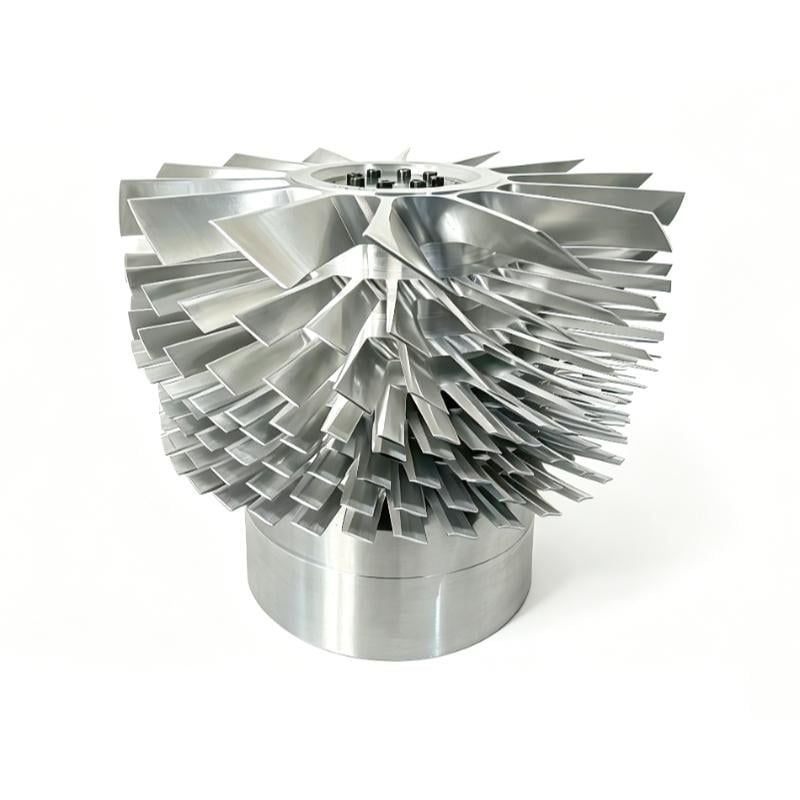
Large impellers are the heart of countless industrial systems—from power generation turbines and chemical processing pumps to marine propulsion units and aerospace engines. Their performance directly impacts efficiency, reliability, and safety, making precision machining non-negotiable. Unlike small or standard impellers, large-scale designs (often measuring over 1 meter in diameter) present unique challenges: complex blade geometries, tight tolerance requirements (often down to ±0.005mm), and the need to maintain structural integrity while minimizing weight. In this blog, we break down the key processes of large impeller precision machining and explain why 5-axis CNC technology has become the gold standard for delivering high-quality, consistent results.
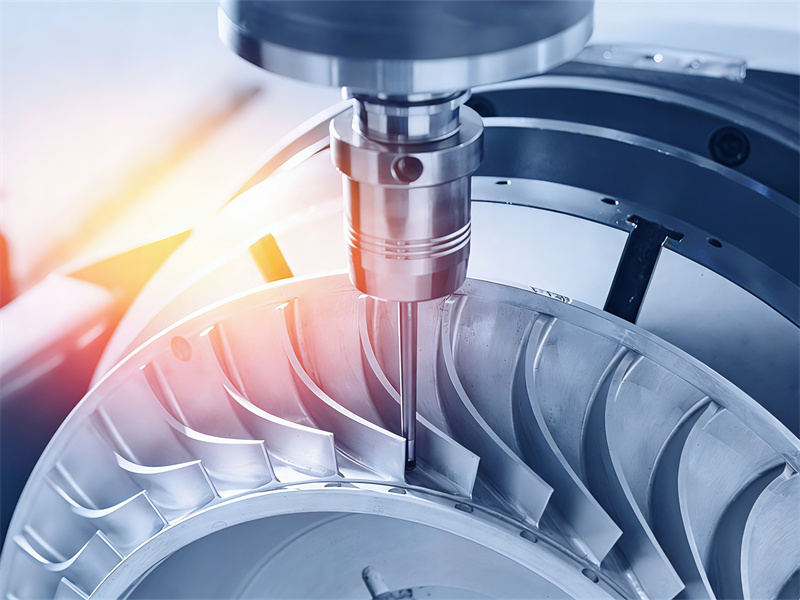
Understanding Large Impeller Precision Machining: Core Requirements
Before diving into processes, it’s critical to define what “precision” means for large impellers. These components are designed to move fluids (liquids or gases) with maximum efficiency, so even minor deviations in blade shape, angle, or surface finish can lead to: increased energy consumption, excessive vibration, premature wear, or even catastrophic failure in high-pressure applications. To avoid these issues, precision machining must address three core requirements:
Ÿ Geometric Accuracy: Blades must match design specifications exactly—including twist, camber, and leading/trailing edge profiles— to ensure optimal fluid dynamics.
Ÿ Tight Tolerances: Large impellers often require micron-level tolerances to maintain balance and reduce friction, especially in high-speed operations.
Ÿ Surface Quality: A smooth, defect-free surface minimizes fluid resistance and prevents corrosion, extending the impeller’s service life.
Achieving these requirements demands a combination of advanced technology, skilled craftsmanship, and a structured machining workflow—starting from material selection to final inspection.
Key Processes in Large Impeller Precision Machining
Large impeller machining is a multi-step process, each stage critical to the final product’s performance. Below is a breakdown of the core steps, from pre-machining to finishing:
1. Material Selection & Preprocessing
The choice of material depends on the impeller’s application. Common options include: stainless steel (for corrosion resistance in chemical or marine environments), titanium (for lightweight strength in aerospace), nickel-based superalloys (for high-temperature applications in power generation), and aluminum (for low-weight, low-pressure systems). Once selected, the material undergoes preprocessing: cutting into rough blanks (often using plasma or oxyfuel cutting for large sizes) and heat treatment to relieve internal stresses—critical for preventing deformation during machining.
2. Rough Machining
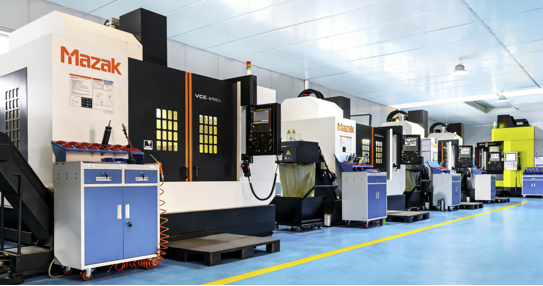
Rough machining removes excess material from the blank to form the basic shape of the impeller, including the hub, shroud, and blade profiles. This stage prioritizes speed and material removal rate, using heavy-duty CNC mills or turning centers. For large impellers, vertical or horizontal machining centers with high spindle power are used to handle the size and weight of the workpiece (which can weigh several tons). The goal is to bring the blank as close to the final shape as possible, while leaving a small machining allowance (typically 0.5–1mm) for finish machining.
3. Finish Machining: The Critical Precision Stage
Finish machining is where precision is achieved, and this is where 5-axis CNC technology shines (more on this below). During this stage, the impeller’s blades, hub, and shroud are machined to their final dimensions, with tight tolerances and smooth surface finishes. Tools used here include high-speed end mills, ball nose mills, and thread mills—selected based on the material and geometry. Coolant systems are also critical here: high-pressure coolant is used to reduce heat buildup, prevent tool wear, and improve surface quality.
4. Post-Machining Treatments
After finish machining, the impeller undergoes post-processing to enhance performance and durability. Common treatments include: deburring (removing sharp edges from blades and surfaces), polishing (to improve surface finish and reduce fluid resistance), and coating (such as chrome plating or ceramic coatings for corrosion or wear resistance). For high-precision applications, the impeller may also undergo balancing—either static or dynamic—to ensure smooth operation at high speeds.
5. Quality Inspection & Testing
No precision machining process is complete without rigorous inspection. Large impellers are inspected using advanced tools to verify accuracy and quality: coordinate measuring machines (CMMs) for geometric accuracy, laser scanners for 3D profile verification, and surface roughness testers to ensure finish requirements are met. Some applications also require non-destructive testing (NDT), such as ultrasonic or X-ray testing, to detect internal defects that could compromise performance.
Why 5-Axis CNC Machining Is Essential for Large Impellers
Large impellers have complex, 3D blade geometries—twisted, curved, and often with varying angles—that are impossible to machine with traditional 3-axis CNC equipment. 5-axis CNC machining solves this problem by allowing the workpiece to be rotated around two additional axes (A and B axes), while the tool moves along the X, Y, and Z axes. This flexibility delivers three key advantages for large impeller machining:
1. Reduced Setups, Increased Accuracy
With 5-axis machining, the entire impeller can be machined in a single setup—eliminating the need to reposition the workpiece multiple times. This reduces human error, minimizes alignment issues, and ensures consistent precision across all blades. For large impellers, which are heavy and difficult to reposition, this is a game-changer for efficiency and quality.
2. Optimal Tool Access
The complex shape of impeller blades means that traditional 3-axis tools would struggle to reach all surfaces without collisions. 5-axis machining allows the tool to approach the blade from any angle, ensuring that every surface—including the tight gaps between blades—is machined accurately. This eliminates the need for specialized tools or manual finishing, reducing costs and improving consistency.
3. Improved Surface Quality & Efficiency
5-axis CNC machines operate at high speeds with precise tool control, allowing for smoother cuts and better surface finishes. This reduces the need for post-machining polishing and extends the impeller’s service life. Additionally, the ability to machine complex geometries in one setup reduces cycle times—critical for large-scale production or custom impeller orders.
Overcoming Common Challenges in Large Impeller Machining
Even with 5-axis CNC technology, large impeller machining comes with challenges. Here are the most common issues and how to address them:
Ÿ Workpiece Deformation: Large impellers are prone to deformation due to their size, weight, and heat buildup during machining. Solutions include using heat-resistant materials, implementing high-pressure coolant systems, and performing stress-relief heat treatments before and after machining.
Ÿ Tool Wear: Machining hard materials (like superalloys) can cause rapid tool wear. Using high-quality, wear-resistant tools (such as carbide or diamond-coated tools) and optimizing cutting parameters (speed, feed rate, depth of cut) helps extend tool life.
Ÿ Balancing: Large impellers must be perfectly balanced to avoid vibration. Dynamic balancing after machining ensures that the impeller rotates smoothly at high speeds, reducing wear on bearings and other components.
The Future of Large Impeller Precision Machining
As industrial systems become more efficient and demanding, the need for high-precision large impellers will only grow. Advancements in 5-axis CNC technology—such as AI-powered tool path optimization, real-time monitoring, and automation—are making it easier to produce complex impellers with even tighter tolerances and faster cycle times.
Conclusion
Precision machining of large impellers is a complex, multi-step process that requires advanced technology, skilled expertise, and a focus on quality. 5-axis CNC machining has emerged as the industry standard, enabling manufacturers to overcome the challenges of complex geometries, tight tolerances, and large workpiece sizes. By following the key processes outlined in this blog—from material selection to quality inspection—manufacturers can produce high-performance large impellers that meet the demands of today’s industrial applications.
Whether you’re looking to optimize your existing impeller machining process or source high-precision large impellers for your application, understanding the role of 5-axis CNC technology and best practices is critical to success. Contact our team of precision machining experts to learn how we can help you achieve your large impeller goals.
 Hot News